Sunday, May 15, 2011

Bionesian bites


Ms. Easter Galuvao, SPREP
Aichi Biodiversity Targets on the Pacific Biodiversity Agenda
16 May Nadi Fiji - The agenda for the one week also includes the Strategic Plan of the Convention on Biological Diversity or the “Aichi Target”, the new global plan to save the biodiversity of the world and includes a number of ambitious targets.  This includes a commitment to halve, and where feasible, bring close to zero the loss of natural habitats and also to protect 17% of terrestrial and inland water areas and 10% of marine areas. Also included are measures to control invasive species and to increase awareness of the values of biodiversity.
It is important to note that there will be additional opportunities for training workshops which will be provided by the CBD Secretariat.
“The targets are within our reach as the Pacific region has worked diligently to protect our unique biodiversity.  The “Aichi Target” will help us strengthen our conservation work across the Pacific,” said Easter Galuvao, SPREP’s Biodiversity Adviser.

“We can boast the Phoenix Islands Protected Area (PIPA) in Kiribati - the largest marine protected area on earth - now a World Heritage Site.  In our Pacific region we also have the Micronesia Challenge, a commitment by the Federated States of Micronesia, Marshall Islands, Palau, Guam and the Northern Marianas to conserve at least 30% of the near-shore marine resources and 20% of the terrestrial resources across Micronesia by 2020.”

On Tuesday a panel from the Micronesia Trust Fund will share their experience in planning to implement the outcomes of the CBD COP 10 in Nagoya.


Nagoya Protocol – Access and Benefits Sharing
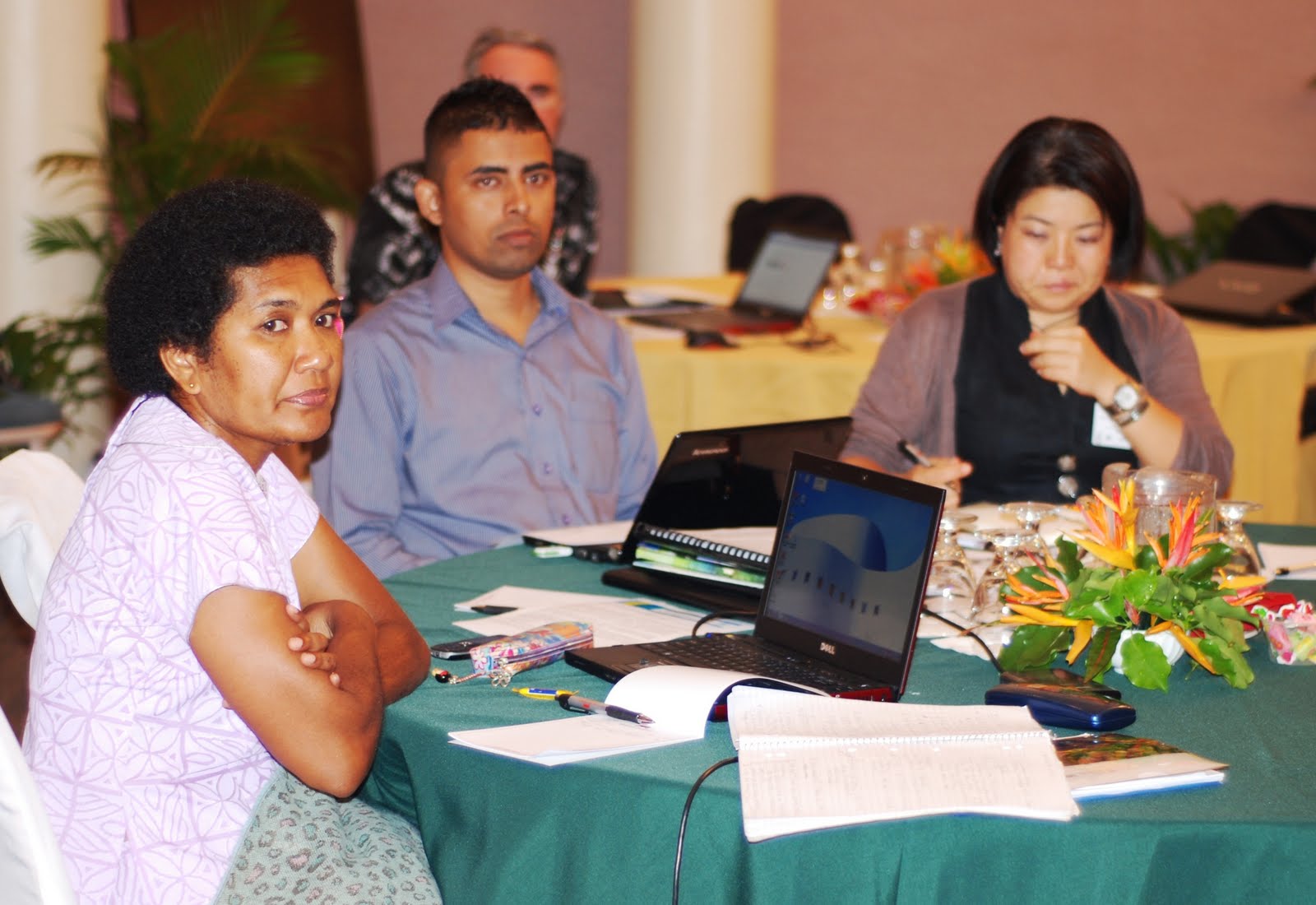
Participants at the Pacific Biodiversity meeting in Fiji
16 May Nadi Fiji - The implications of the Nagoya Protocol on the Pacific islands will be discussed during the 5 day meeting on Pacific biodiversity currently underway in Fiji.  This Protocol covers the access to genetic to resources and the fair and equitable sharing of benefits from their use.  The Nagoya Protocol is forecast to be in force by 2015.

It ensures that balanced access to genetic resources on the basis of prior informed consent and mutually agreed terms.  The Nagoya Protocol also ensures the fair and equitable sharing of benefits while taking into account the important role of traditional knowledge. 

As an example, and hypothetically, if a pharmaceutical company from Switzerland discovered a plant in the Solomon Islands which could lead to a drug which cured cancer, then that company would now be obliged to share the profits arising with the country.

“The adoption of this protocol will help ensure equity and fairness in the sharing of the profits made by the developed world from the biodiversity resources of the developing world in the small island developing states.  The next step is for the Pacific island countries and territories to sign up to the Protocol when they are ready and if they agree with it,” said Easter Galuvao, SPREP's Biodiversity Adviser.

The Global Environment Facility has offered financial support to assist with the early entry into force of this Protocol.


Notes:The meeting is held from 16 – 20 May at the Tanoa Hotel in Nadi, Fiji.
Participants are from the Cook Islands, Timor Leste, Federated States of Micronesia, Fiji, Kiribati, Marshall Islands, Nauru, Niue, Palau, Samoa, Solomon Islands, Tonga, Tuvalu, Vanuatu, Foundation of the Peoples of the South Pacific International (FSPI), IUCN - International Union for Conservation of Nature, United Nations Environment Programme (UNEP), WWF South Pacific Programme, University of the South Pacific.

The Pacific reflects on international biodiversity conference

Touasi Tiwok, Vanuatu,  CBD COP 10, Nagoya
Six months ago, the Pacific island region unified under a “One Pacific Voice” approach at an international biodiversity conference that brought together 18,000 people in Nagoya, Japan.  This week in Nadi these same Pacific island countries and partners have come together once again to review the performance of the Pacific and pave the way forward following the outcomes of the 10th Conference of the Parties to the Convention on Biological Diversity (CBD COP 10).


“At Nagoya, under the Pacific Voyage banner, we made a huge impact. Our voices were heard because we spoke with One Voice,” said Stuart Chape the Island Ecosystems Programme Manager of the Secretariat of the Pacific Regional Environment Programme (SPREP), as he opened the one week gathering.

“We were well coordinated, and we took a firm stand on issues that were important to our region. I am pleased to say that many of our development partners highly commended the Pacific island countries' performance, strong convictions and perseverance in Nagoya.  This success underscores the importance of working together as One Pacific speaking with One Voice - an approach that we should replicate at future Conferences of the Parties.”

Stuart Chape, SPREP

The agenda for the week will see discussions cover the Nagoya Protocol on Access and Benefit Sharing, the Strategic Plan of the Convention on Biological Diversity also known as the “Aichi Target”, funding opportunities, Protected Areas, Island Biodiversity and National Biodiversity Strategy Action Plans. 

This meeting is just one of a series of meetings to come for the region under the different outcomes of the CBD COP 10, to help the Pacific progress implementation to meet both national and the global biodiversity targets.  The next five days will provide time for the Pacific region to re-group, review their achievements at the international biodiversity meeting in Nagoya and work towards using the lessons learnt to progress implementation.

“It is not our intention to provide you with all the answers this week. However, it is our hope that this meeting will provide a platform for sharing information, ideas and experiences.  Although the agenda may seem ambitious I am confident that with your cooperation and active participation in the next five days, we can achieve a successful outcome - one that will provide us with an effective road map that will help Pacific countries progress towards meeting global, regional and national biodiversity targets.”

Notes:The meeting is held from 16 – 20 May at the Tanoa Hotel in Nadi, Fiji.
Participants are from the Cook Islands, Timor Leste, Federated States of Micronesia, Fiji, Kiribati, Marshall Islands, Nauru, Niue, Palau, Samoa, Solomon Islands, Tonga, Tuvalu, Vanuatu, Foundation of the Peoples of the South Pacific International (FSPI), IUCN - International Union for Conservation of Nature, United Nations Environment Programme (UNEP), WWF South Pacific Programme, University of the South Pacific.


Tuesday, March 15, 2011

Pacific Islanders celebrate 2011 Pacific Year of the Dugong


14 March 2011, Palau - Dugong protection in the Pacific Islands region will be highlighted this year as part of the Pacific Year of the Dugong. It is a boost to the conservation of the species and its seagrass habitats.

The regional campaign was launched in Korror, Palau this week by President Johnson Toribiong and Minister of Natural Resources, Environment & Tourism Harry Fritz.

Palau hosts the smallest, most remote and critically endangered dugong population in the region.


In launching the regional campaign Palau also commenced their national campaign with the reminder by President Toribiong that we are stewards of the environment and have a moral obligation to protect dugongs in the spirit of “I’ll save you so some day you’ll save me”.

He requested support from other nations to join Palau to preserve, protect and cherish this important, unique dugong population.

Minister Fritz urged Palauans to take the task of education to protect, respect and love dugongs and their habitats.

It was also acknowledged at the launch of the Pacific Year of the Dugong 2011 that there is a need to address poaching which is the biggest threat to the fragile population in Palau. Authorities were urged to work together to enforce legislation to prevent this and it was highlighted that publicising arrests and convictions for poaching of dugongs would be an effective deterrent within the general community.

Raising the awareness on the status of dugongs and related aspects as well as the existing legislation was also raised as an important area for immediate attention.

Minister Yano closed the launch by confirming Palau’s Government full commitment to support the Pacific Year of the Dugong campaign and shared a personal experience when a local woman released a dugong that was tied up signifying that a single act can make an important change.

Notes: At the launch, about 60 invited guests, representing Government Ministries, NGOs, communities, students and industry groups were present. Opening remarks were given by the Honourable Minister of Natural Resources, Environment and Tourism. Guest speakers included SPREP and UNEP/CMS representatives. Presentations were given by the Koror State Rangers, Division of Fish and Wildlife of the Ministry of Justice and the Bureau of Marine Resources. The participants were entertained over lunch with the Palau Dugong song composed by Mr Edward Anastacio. The Minister of State, Mr Victor Yano gave closing remarks.

SPREP STATEMENT AT REGIONAL LAUNCH OF THE PACIFIC YEAR OF THE DUGONG


14 March, Palau - This statement was read on behalf of the Secretariat of the Pacific Regional Environment Programme (SPREP) by the Marine Species Officer, Mr. Lui Bell, at the launch of the Pacific Year of the Dugong in Palau.

“The SPREP Director, Mr David Sheppard, sends his apologies for not being here today due to a prior commitment to attend the Climate Change Roundtable currently taking place in Niue.

On behalf Mr David Sheppard, I would like to thank the Government of Palau and the organizers of this event for accepting our request to include the regional launch of the Pacific Year of the Dugong campaign as part of your national campaign launch today. Thank you.

It was originally envisaged that the regional launch here would include representatives from all Pacific Island dugong range states and to also include of the review the regional dugong action plan. Unfortunately, funding constraints has made this impossible.

As most of you know, SPREP has been operating a regional marine species programme which focuses on three groups of marine species of conservation concern: dugongs, marine turtles and cetaceans. SPREP has a 5-year regional action plan for each of these groups.

In 2007 the SPREP Meeting endorsed the Secretariat’s proposal to also include sharks in its regional marine species programme. In November 2009, the regional Plan of Action for Sharks was launched jointly by SPC, FFA and SPREP.

SPREP’s work for the conservation and management of marine mammals in the Pacific Islands region can be dated back to the mid 1980s when UNEP’s Regional Seas Programme supported dugong conservation projects in Palau and Vanuatu.

In 1991 SPREP and UNEP facilitated a regional biodiversity conservation workshop in Vanuatu. One of the outcomes of this meeting was work towards a draft Marine Mammal Conservation Programme.

The Regional Marine Mammal Conservation programme’s first meeting was in 1993 where the focus was on briefing members on the significance of and threats to marine mammals in the region. Most of the work of the Regional Marine Mammals Conservation Programme during 1993-2003, was focused on whales and dolphins.

However, in 2002, it was decided to give more recognition to dugongs, and as a result the SPREP regional marine mammal programme was split with dugongs and cetaceans having separate regional action plans. Thus, starting from 2003, separate 5-year regional dugong and cetacean action plans were in place.

The current SPREP regional Dugong Action Plan 2008-2012 centers on nine key areas or themes: (i) Education and Awareness, (ii) Habitat Protection, (iii) Management, (iv) Traditional Knowledge, Customary Marine Tenure and Traditional Resource Management, (v) Capacity Building, (vi) Threats, (vii) Research and Monitoring, (viii) National, Regional, and International Collaboration, and (ix) Human and Financial Resources.

Even though dugongs occur in the waters of only 6 of the SPREP members (Australia, New Caledonia, Palau, Papua New Guinea, Solomon Islands and Vanuatu), the proposal to declare 2011 as the Pacific Year of the Dugong received strong support and was endorsed by SPREP members at the 21st SPREP annual meeting, Papua New Guinea, September 2010.

The campaign is considered necessary due to several factors, for example:
• Dugongs are considered vulnerable to extinction on the global scale. All dugong populations are listed on Appendix 1 of Convention on International Trade in Endangered Species of Wild Fauna and Flora (CITES). Dugongs are additionally listed on Appendix II of the Convention on the Conservation of Migratory Species of Wild Animals (CMS), which means they are considered, under CMS, to have an unfavourable conservation status and require international agreements for their conservation and management.
• Dugong is the only surviving member of the family Dugongidae, with its closest relative, Stellar’s sea-cow, hunted to extinction within 27 years of its discovery in the eighteenth century.
• They have disappeared from several areas including waters off Mauritius, Taiwan, western Sri Lanka and the Maldives. This can be a reality in our region as well.
• The dugong population in Palau is considered to be the most isolated in the world, and in addition to threats facing this population, it can be classified as “critically endangered”.
• Dugongs are also of high cultural value in many parts of their range, a valued source of food, medicine and artefacts and a flagship species for coastal peoples.
• There is not much information available on dugong populations in the SPREP region and much work is needed to improve information, awareness and ultimately their management and protection.

The Pacific Year of the Dugong Campaign has four key objectives:
• Promote awareness and conservation of dugongs at site-level targeting key stewards and the fishing industry;
• Reduce dugong mortality as a result of human activities;
• Improve status information and promote sustainable management of dugong populations and protection of their habitats at the national level through effective and practical national legislation and policies;
• Advance partnerships and secure resources for long-term support for dugong conservation in the region

Dugongs face a host of threats to their survival. They are an easy target and are highly susceptible to coastal hunters. Subsistence hunting of dugongs may have been sustainable in the past. However the combination of increasing human populations in the Pacific and the introduction of new harvesting technologies such as outboard motors and gill nets has severely impacted the species. The fact that dugongs have a long life span but are slow breeders makes them susceptible to population decline. It has been estimated that a dugong population of only 100 animals would not sustain any human-caused mortality.

Dugongs also face many other threats including incidental by-catch in fishing gear, vessel strikes and destructive fishing practises. The incidental drowning of dugongs caught in fishing gear, such as gill-nets, has contributed to the major decline of dugongs in much of its range. The increase in vessel traffic also increases the likelihood of dugongs being killed by vessel strikes.

Then there are the threats to the food sources of dugongs, seagrasses. Coastal development increases sedimentation and turbidity which not only smother seagrass but also reduce the amount of light reaching them, resulting in the degradation of seagrasses and a reduction in their density and productivity.

SPREP’s work is guided by its mandate, which is “to promote cooperation in the Pacific islands region and to provide assistance in order to protect and improve the environment and to ensure sustainable development for present and future generations”.

This theme of cooperation and providing assistance is, first of all, reflected in SPREP’s commitment to maintain, facilitate and provide support and assistance to implement the regional marine species programme, including the regional dugong action plan.

Secondly, SPREP seeks cooperation of partners and collaborators to implement the action plans, sometimes by entering into Memorandum of Understandings.

I would like to acknowledge here our collaboration with the Convention on Migratory Species (CMS) under a Memorandum of Cooperation signed in 2005 which has since resulted in closer working relationship between SPREP and CMS on marine species work that includes dugongs. I would also like to acknowledge in particular the recent assistance from UNEP/CSM for dugong work in the Pacific Islands region.

However, there are over-arching problems and challenges surrounding conservation efforts in the Pacific Islands region. Some of these include:
• Lack of data and information resulting from the absence or lack of ongoing and long-term research and monitoring programmes;
• Limited public awareness and education programmes;
• Limited in-country skills / capacity to provide leadership in marine species conservation management;
• Limited national management mechanisms to protect marine animals and their habitats;
• Limited information exchange, linkages and collaboration.

To address these challenges, SPREP calls on Governments and partners, communities, fishermen, marine tour operators and developers, for us all to work together:
• To establish long-term dugong research and monitoring programmes at both community and national levels to improve our knowledge of the status of dugongs for informed decisions on management.
• Develop or review current legislation to adequately and effectively protect dugongs. A vital component of this is the ability for effective enforcement.
• Protect sea-grass habitats which are vital to dugongs as well as a host of other marine species and consider the impacts of coastal development on sea-grass habitats in Environmental Impact Assessment processes.
• Seize the excessive and illegal hunting of dugongs and the use of destructive fishing methods.
• Minimize impacts from gillnets and boat strikes by following simple guidelines.

The continuing health of dugong populations is essential to maintaining a healthy Pacific Ocean. Join us as a Pacific family in making sure we play our part to Respect and Protect dugongs and their habitats.

In closing, I would like to congratulate all of the SPREP members that are dugong range states for signing the CMS MoU for the Conservation and Management of Dugongs and their habitats throughout their range.

I would like to especially congratulate the Government of Palau and local promoters on the great initiatives and achievements in the declaration of the sanctuary for sharks and sanctuary for marine mammals. These are milestone examples for the region advancing the conservation of marine species of conservation concern.

Ladies and gentlemen, I would like to affirm SPREP’s commitment to the implementation of the regional dugong action plan and this Campaign and will continue to look at new ways to strengthen our cooperation with partners in order to achieve common goals.

Thank You.”

The Pacific Year of the Dugong; Respect and Protect


14 March, 2011, Palau - The campaign to progress the protection of the dugong, led by the Secretariat of Pacific Regional Environment Programme (SPREP) and its partner the Convention on the Conservation of Migratory Species of Wild Animals (UNEP/CMS), will target local coastal and fishing communities and water craft users in the Pacific region.

Awareness and outreach activities highlighting the need for protection of dugongs in the Pacific Islands region will be the focus of the campaign being initiated through national launches in New Caledonia, Papua New Guinea, Solomon Islands and Vanuatu.

A number of initiatives to build local capacity to deliver positive conservation outcomes for dugongs in the Pacific Island region will also be promoted throughout the Pacific Year of the Dugong.

A new pilot project using financial incentives to address direct hunting and the incidental capture of dugongs by changing people’s practices and improving the livelihoods of local communities in Daru Papua New Guinea are among the initiatives to be promoted under the Pacific Year of the Dugong 2011.

Dugongs, which play a significant ecological role in the functioning of coastal habitats, live in warm coastal and islands waters from East Africa to Vanuatu in the Pacific.

The conservation and plan developed under the United Nations Environment Programme/CMS Memorandum of Understanding on the Conservation and Management of Dugongs and their Habitats throughout their Range (Dugong MoU) provides the framework for the regional cooperation for the long-term protection of dugongs in the Indian Ocean, South East Asia, South Asia, Australia and the Pacific Islands. Specific to the Pacific Islands region, SPREP has a regional Dugong Action Plan 2008-2012.

All range states in the Pacific Island region (Australia, Papua New Guinea, Palau, New Caledonia, Solomon Islands and Vanuatu) have committed to the Dugong MoU as signatories. In 2010 Palau declared a marine mammal sanctuary, which includes dugongs, within its Economic Exclusive Zone.

For more information on the Pacific Year of the Dugong 2011, please visit: http://www.sprep.org/biodiversity/PYOD/index.html

Thursday, November 11, 2010

Pacific getting ready to meet new Biodiversity targets


18,000 people from around the world gathered recently in Nagoya, Japan at the 10th Conference of the Parties to the Convention on Biological Diversity (CBD COP10). 

14 countries in the Pacific are members of the CBD and the “Pacific voice” was well represented in Nagoya.

The Secretariat of the Pacific Regional Environment Programme (SPREP) worked in partnership with Non-Governmental Organisations (NGO’s) in the Pacific region to provide support and advice to the Pacific delegations at Nagoya.  

The meeting discussed how to address the dramatic loss of biodiversity currently occurring on earth. In fact one species is being lost every 38 minutes!

Delegates responded with a new commitment to “Live in Harmony with Nature”.

The conference agreed a number of outcomes, which have significance globally and for our Pacific region.

The Strategic Plan of the CBD or the “Aichi Target” was adopted at Nagoya. This is the new global plan to save the World’s biodiversity and includes a number of ambitious targets.

The “Aichi Target” includes a commitment to halve, and where feasible, bring close to zero the loss of natural habitats and also to protect 17% of terrestrial and inland water areas and 10% of marine areas. Also included are measures to control invasive species and to increase awareness of the values of biodiversity.

“We are pleased to welcome the Aichi Target as a guide for our region to work towards,” said David Sheppard, the Director of SPREP. 

“The targets are within our reach as the Pacific region has worked diligently to protect our unique biodiversity.  We can boast the Phoenix Islands Protected Area (PIPA) in Kiribati - the largest marine protected area on earth - now a World Heritage Site.  In our Pacific region we also have the Micronesia Challenge, a commitment by the Federated States of Micronesia, Marshall Islands, Palau, Guam and the Northern Marianas to conserve at least 30% of the near-shore marine resources and 20% of the terrestrial resources across Micronesia by 2020.  The “Aichi Target” will help us strengthen our conservation work across the Pacific.”

Another key outcome from the conference was the Nagoya Protocol covering the access to genetic resources and the fair and equitable sharing of benefits from their use.

As an example, and hypothetically, if a pharmaceutical company from Switzerland discovered a plant in the Solomon Islands which could lead to a drug which cured cancer, then that company would now be obliged to share the profits arising with the country.

This historic agreement is of great importance to the Pacific region.

It ensures that balanced access to genetic resources on the basis of prior informed consent and mutually agreed terms.  The Nagoya Protocol also ensures the fair and equitable sharing of benefits while taking into account the important role of traditional knowledge. 

It is expected the Nagoya Protocol will be in force by 2015. The Global Environment Facility has offered financial support to assist with the early entry into force of this Protocol.

“We have seen history in the making,” said Fiji’s Ambassador to Japan, H.E Mr Isikeli Mataitoga the Head of delegation for Fiji. He added:

“The adoption of the ABS protocol is a major step forward in bringing equity and fairness in the sharing of the profits made by the developed world from the biodiversity resources of the developing world, including the small island developing states.”

The current challenge for Pacific countries is to translate these key outcomes into national biodiversity strategies and to secure support from the international community for their implementation.

Many substantial commitments were made by countries at Nagoya, including a commitment by the Government of Japan of $2billion US to help developing countries protect their biodiversity

“For us in this region, it means working towards identifying opportunities and innovative ways to take these outcomes forward. We have agreed to the Aichi Target now we need to see how and where we can incorporate the different objectives into work we are doing at the national and regional level in the Pacific,” said Easter Galuvao, the Biodiversity Adviser of SPREP.

“In some cases we are on track with the targets, in other cases we need to work harder in a concerted and holistic manner as a region so that by 2020, the Pacific region can once again showcase to the world what we have accomplished as part of our contribution to save our biodiversity.”

These are just several of the many achievements of the biodiversity conference in Nagoya.

There were many more for the Pacific region.  Representation from the region ensured a strong Pacific presence was felt and heard as they were a vocal part of the negotiations. 

A communications campaign – “The Pacific Voyage” helped ensure Pacific visibility was high and our voices heard at the gathering of 18,000 participants with promotional materials and events which highlighted conservation successes in the Pacific as well as an event which promoted the different types of communication and awareness raising activities on nature conservation.

For SPREP the meeting has helped provide the guide for future work with the different member countries as the region strives to meet the Aichi Targets to help save global biodiversity.

Notes:
To read the full 2020 Headline Targets – Advance Unedited Text please visit Strategic Plan for Biodiversity, 2011 - 2020: http://www.cbd.int/nagoya/outcomes/

The 14 Pacific island parties to the CBD are Cook Islands, Federated States of Micronesia, Fiji, Kiribati, Marshall Islands, Niue, Nauru, Palau, Papua New Guinea, Samoa, Solomon Islands, Tonga Tuvalu, Vanuatu.

Our core partners who worked closely with us as part of the Pacific Voyage in Nagoya are The Secretariat of the Pacific Community, WWF South Pacific, Greenpeace Pacific, Wildlife Conservation Society, IUCN Oceania. 

Support was also provided from GLISPA the Global Island Partnership, Ms. Neva Collings on ABS and Article 8)j) and Ms. Mae Adams from TNC.

Friday, October 29, 2010

Update on Biodiversity talks in Nagoya

As of midnight, the morning of Saturday 30 October, the plenary discussion for the 10th Conference of the Parties to the Convention on Biological Diversity was still underway.

The Pacific Voyage Media Team are preparing to return home and an update of the final outcome will be provided to you next week, along with final stories concluding The Pacific Voyage at the Biodiversity talks in Nagoya.

To view the webcast of the final plenary, please visit:  http://webcast.cop10.go.jp/player.asp?id=2921&type=live

COP10 heads for tense finish

Pacific Voyage Media Team 29 October Nagoya Japan -


The negotiations on targets to preserve the environment will continue until the last second, the Chair of COP10 told the media today, as the Nagoya Biodiversity talks wrap up.

Japan’s Environment Minister Ryu Matsumoto said governments –including a strong representation from the South Pacific – were all keen on an agreement.

"Everyone is saying that they want to wrap up a deal, that they don't want to go home from Nagoya empty-handed," he told reporters. "We will work until the last second."

Delegates from nearly 200 countries have been negotiating for two weeks goals to protect oceans, forests and rivers.  But the negotiations on how ambitious the targets should be are divided over a number of issues.

Developing nations for example are have refused to sign up to 2020 goals without agreement on a new U.N. protocol that would give them a fairer share of profits made by companies, such as pharmaceutical firms, from their genetic resources.  The protocol could unlock billions of dollars for developing countries, where much of the world's natural riches remain, but countries are split on the scope of the framework and how to check where a genetic resource comes from.

Following two days of intense discussions among 50 delegates, led by eight facilitators appointed by Japan, to help reach an access and benefit-sharing protocol (ABS), an update was presented to all delegates.

"We have made progress, but we have not finished," said Timothy Hodges, co-chair of the group working on the ABS agreement.

Broad consensus was reached on introductory language related to traditional knowledge of the use of plants and organisms in medical or biological products.   Still on the table were issues that have divided ABS negotiators since the conference began Oct. 18. Topping the list was how to include derivatives of genetic resources in a final agreement.

Meanwhile, the World Bank has announced it will begin a project to help developing countries integrate the economic benefits of nature into their state policies.  Introducing ecosystem valuation into national accounting systems will help governments make better decisions about the way their nature is managed, World Bank Group President Robert Zoellick.

"We need to give top decision-makers the tools they need to make the right decisions," said Zoellick.

The World Bank President gave an example of how a country could change its nature calculations.

"For example, in clearing mangroves for shrimp farming, the calculation will no longer simply be the revenue from profit on shrimp farming minus the farming cost,” he said.  “It would now deduct the loss of coastal protection from cyclones, and the loss of fish and other products provided by the mangroves from its calculations.”

Pacific Ocean for your children and all of us

The Pacific Voyage Media Team 29 October Nagoya Japan -

The Pacific Ocean 2020 Challenge needs a body like the Pacific Ocean Commission to achieve its goals.

The point was raised by H.E Isikeli Mataitoga, Ambassador of Fiji to Japan, during a side event at the 10th Meeting of the Conference of the Parties (COP10) on the Convention of Biological Convention (CBD) at the Nagoya Congress Centre.

“You need a body that can bring together all the issues under sustainable development,” Mr Mataitoga said.

“One that will run and keep this important Challenge in the forefront of politicians and senior democrats in the region.  This body should be able to front up to politicians and say, look guys, the Pacific Ocean is for your children, your children’s children and for all of us and we need to keep it sustainable. It won’t be a Pacific Ocean if it is not sustainable in the long term.”

The Ambassador said the Pacific Ocean 2020 Challenge also needs a framework that’s going to make everybody happy.

“But there will be obstacles,” he warned.

“There are regional frameworks that already exist in law and practise that may be considered in the long term but that has to take its shape and provision from the CBD because it is the only convention at the UN level that has a wide acceptance in this point of time."

Bernard O'Callaghan, Regional Programme Coordinator of the International Union for the Conservation of Nature (IUCN) said part of the challenge is the fact the Pacific ocean is big.

“It’s the biggest geographical feature in the world. Governments have a number of interests. The bigger challenge is getting on the agenda of the larger countries,” he said.  “The Pacific Ocean is under resourced. People tend to use it for transport, for fish it’s all about extracting resources from the Pacific.”

The Pacific Ocean 2020 Challenge sets out to protect the Pacific Ocean.

“There is a whole lot of endangered species [in the Pacific Ocean],” he said. “Tuna is vitally important for the community, vitally important for the economies of the Pacific islands. Appropriate attention needs to be paid to ensure these tuna stocks stay viable for the long term.”

The Pacific Ocean, he said, is very important to the world.

“Two out of three fish in the world come out of the Pacific ocean so it’s important that the Pacific Ocean is managed sustainably for the long term,” said Mr O'Callaghan.

The challenge involves working with a number of governments in the Pacific region where they are asked to work together to manage the ocean.

“This is so we can firstly share good long term sustainable governance for the Pacific ocean, share research, share education, share training, identify additional financial resources for cooperation,” he said.  “Some of these changes take time; it’s not going to happen very quickly. We need to build momentum over the next two to three years.”
The Challenge was discussed at the Pacific Islands Forum this year.

According to the Challenge’s website, The Pacific Ocean 2020 Challenge aims to forge partnerships with sectors of ocean users who have not previously been fully engaged in ocean governance initiatives, and spanning geographic areas beyond the traditional ‘Pacific region’.

Working with Pacific Ocean-wide coalitions for action will enable the Challenge to complement and enhance stakeholder-engaging activities already established by intergovernmental regional agencies and NGOs around the region, thus avoiding duplication of activities.

In doing so, it is envisioned that a holistic and practical approach to ocean governance in the region will become a reality, and that the region will have a sustainable and healthy Pacific Ocean by 2020.

According to the Pacific Ocean Synthesis report, the Pacific Ocean is faced with major threats of “pollution, habitat destruction, overfishing and harvesting and climate change.” 

The Pacific Ocean accounts for half of our planet’s total ocean area and a full one-third of the planet’s surface, making it the largest single geographic feature on our planet.  This vast region supports many complex ecosystems and ocean-based economies, producing a wealth of resources for local and global consumption.  However, sustainably managing these natural and economic resources presents an enormous challenge.

Making sure gender has a place at the Nagoya biodiversity talks

The Pacific Voyage Media Team 29 October -


Marie Khan

Marie Khan, Gender Focal Point of the Convention on Biological Diversity (CBD) says they are  hoping that gender issues win a place on the development agenda here in Nagoya.  To date, the parties to the CBD have agreed and supported that gender equality is a cross cutting issue.

“We cannot ignore that 60 percent of women are the guardians of our environment, so it is normal that we should be include a gender mainstreaming perspective at the biodiversity negotiations,” Khan stresses.

The aim of gender mainstreaming, which focuses on shifting the existing power relationships, and bringing the roles and needs of women and men high on the development agenda.  Khan says that it is the goal to  bring forth gender equality through advocacy, technical support  and  capacity-building.

Nature is  important to all of us, women and men use it in different ways, have different knowledge about it and have access to different natural resources.  However women are still the less empowered and their voices are rarely heard when decisions are made on  the environment. 

Khan says that at the CBD nations are also supportive of the implementation of the gender plan of action.  However, they would want the gender focal point position to be permanent at the Secretariat of the CBD.   Currently Khan’s position is being funded by Finland for which the funding will cease next year

Ongoing talks are still being conducted at the last day of the negotiations.

“We are hoping that decision on the budget provision will be made,” Khan cites and notes that progress on their aim at the CBD is much better than elsewhere.

“CBD is the only one with gender plan of action in the global level, “ she says.

The Women’s Environment and Development Organization (WEDO) and other members of the Global Gender and Climate Alliance are attending  the 10th meeting of the parties to the Convention on Biological Diversity coordinating daily women and gender caucus for gender mainstreaming advocacy.

In an  earlier interview WEDO Advocacy Coordinator Rachel Harris says their presence here is to make sure that the perspective of  both men and women are being put forward within  all new agreements at  COP10.